

Most internal communications advice is written for enterprises with dedicated comms teams, six-figure budgets, and thousands of employees. If you run a 30-person company or a 200-person scale-up, that advice does not apply.
Small and mid-sized businesses need internal comms that are lean, practical, and effective without a full-time team managing them. Here are five best practices that actually work at SME scale in 2026.
1. Default to one channel, not five
The single biggest mistake SMEs make is spreading communications across too many tools. Email for announcements, Slack for chat, WhatsApp for urgent messages, Google Docs for meeting notes, and a shared drive nobody checks.
Every extra channel is another place to check, another place to miss something, and another context-switch tax on people who just want to know what is going on. The cost is real even if you never put a stopwatch to it.
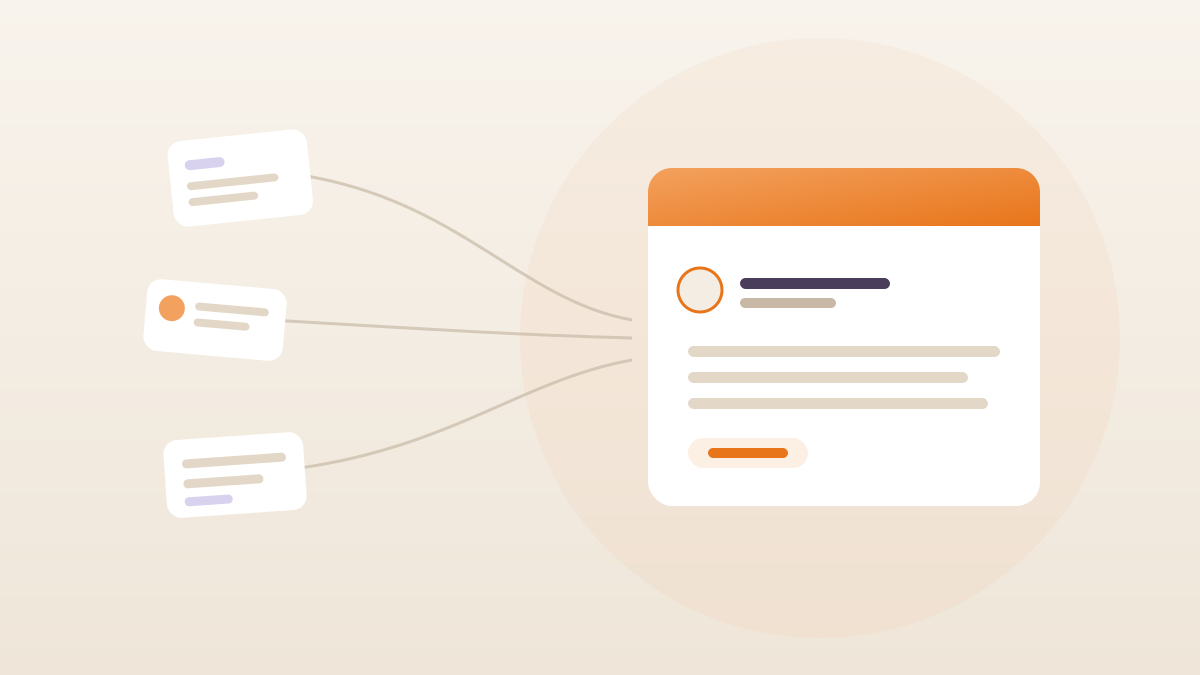
The fix is simple: pick one platform for structured internal communications. Use it for announcements, updates, and discussions. Let your chat tool handle real-time conversations.
2. Make announcements trackable, not broadcast
When you send an important announcement (a policy change, a security update, an office closure), you need to know who actually read it. Not who received it. Who read it.
Internal email is the clearest example of the gap. Across benchmarks it averages a ~67% open rate but only a ~6–7% click-through (ContactMonkey, 2025 Internal Email Benchmark Report). Most messages are delivered; far fewer are actually read or acted on. An "open" tells you the email was rendered, not that anyone absorbed it.
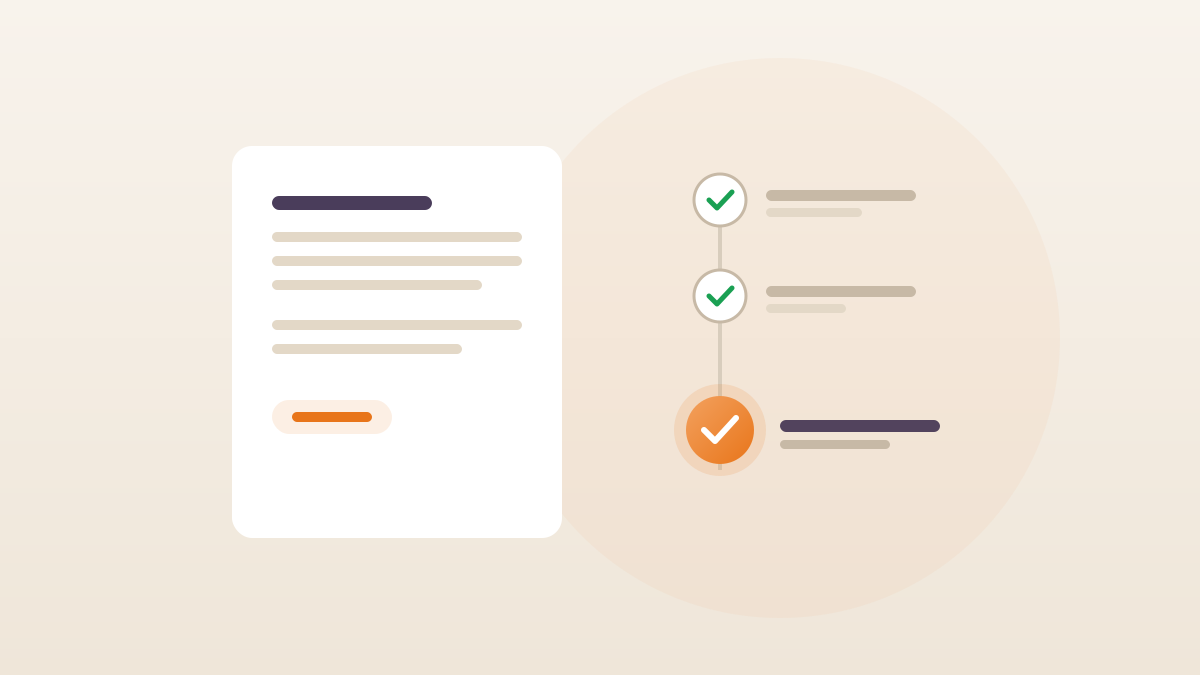
The fix: use acknowledgment tracking. Send the announcement, and require employees to confirm they have read and understood it. Not as surveillance, as accountability. When only 60% of your team acknowledges a policy change, you know exactly where to follow up.
3. Create spaces for context, not just broadcast
The difference between a broadcast tool and a communications platform is conversation. Broadcasts push information down. Platforms let information flow in both directions.
For every major initiative, create a dedicated space where:
- Leadership can share updates and context
- Employees can ask questions and raise concerns
- Documents and resources are collected in one place
- Decisions and outcomes are recorded
This is not about creating more noise. It is about creating structured containers for conversation. A well-organised space reduces ad-hoc messages because people know where to find answers.
4. Measure engagement, not just reach
Most SMEs measure internal comms with a single metric: "Did we send it?" That tells you nothing about whether it worked.
Three metrics that actually matter:
Read rate: What percentage of the intended audience actually opened and read the message? Aim for 80%+ on critical announcements.
Acknowledgment rate: Of those who read it, how many confirmed they understood? This is your leading indicator for compliance and alignment.
Response rate: For messages that invite feedback, what percentage of employees responded? Track this as a trend rather than a target. What matters is whether it is rising or falling.
The kicker is how few organisations do any of this. Gallagher's State of the Sector 2025 found that fewer than one in ten organisations use data to inform their channel strategy. Measurement itself is still the differentiator.
Kayden Connect's analytics dashboard tracks read, acknowledgment, and sentiment out of the box, no custom reporting needed.
5. Make it mobile-first for deskless teams
If any portion of your workforce is deskless (retail, field service, construction, logistics, healthcare), your internal comms must work on mobile. Not "responsive." Mobile-first.
Deskless workers do not sit in front of the same comms tools head-office staff use all day. If the only way to reach them is an intranet they have to remember to log into from a shared terminal, important messages will reliably miss them.
Mobile-first means:
- Push notifications for critical updates
- Offline access for reading content
- Quick reactions and acknowledgments without typing
- Camera integration for field updates
Putting it all together
Effective internal communications for SMEs is not about doing more. It is about doing less, better:
- Consolidate to one channel for structured comms
- Track acknowledgment, not just delivery
- Create structured spaces for two-way conversation
- Measure engagement with real metrics
- Prioritise mobile access for your entire team
These five practices do not require a comms team or a six-figure budget. They require the right platform and the discipline to use it consistently.
See how SMBs use Kayden Connect →